As you explore the evolving landscape of smart home technology in 2026, choosing the right hub is essential for seamless integration and automation. With options ranging from the versatile Hubitat Elevation C-8 Pro to the privacy-focused Aqara Smart Home Hub M3, there’s a solution tailored to your needs. But what should you really consider when selecting the best hub for your home? The answers might surprise you.
Hubitat Elevation Home Automation Hub (Model C-8 Pro)

If you’re looking for a powerful yet user-friendly solution for your smart home, the Hubitat Elevation Home Automation Hub (Model C-8 Pro) is your best bet. This hub controls over 1000 devices from various brands, using Zigbee, Z-Wave, and Matter protocols for seamless connectivity. You can create complex automation rules directly from the hub, managing everything from locks to thermostats effortlessly. Its compact size and lightweight design make it easy to fit into any space. Plus, with extensive support resources available, you’ll find help when you need it. Elevate your smart home experience with the Hubitat C-8 Pro today!
Best For: Users seeking a powerful, versatile, and user-friendly hub to control a wide range of smart home devices.
Pros:
- Supports over 1000 smart devices from more than 100 brands, enhancing compatibility.
- Allows for local processing, ensuring faster response times and improved privacy.
- Extensive automation capabilities enable detailed control without needing external services.
Cons:
- New users may find some features challenging to navigate.
- Initial setup may require updates and restarts, which could be inconvenient.
- Limited customer reviews indicate some users may have faced issues during setup or use.
Aeotec Smart Home Hub, Compatible with Alexa and Google Assistant
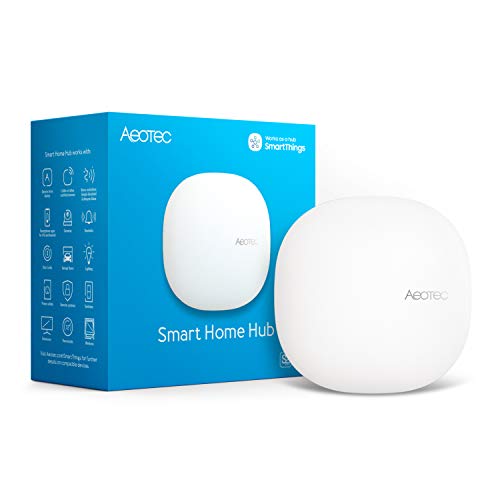
The Aeotec Smart Home Hub stands out as the perfect choice for anyone looking to integrate a wide range of smart devices into their home automation system. This versatile hub functions as a SmartThings Hub, Z-Wave, Zigbee, and Matter Gateway, ensuring compatibility with thousands of devices. You’ll appreciate the easy setup through the SmartThings app, whether you opt for wired Ethernet or Wi-Fi connectivity. With support for popular voice assistants like Alexa and Google Assistant, managing your smart home becomes effortless. Automate routines for lights, sensors, and switches, all while enjoying improved speed and reliability with local automation.
Best For: Those seeking a comprehensive and compatible solution for integrating multiple smart devices into their home automation system.
Pros:
- Wide compatibility with thousands of devices across various brands, including support for Matter, Z-Wave, and Zigbee.
- Easy setup through the SmartThings app with options for both wired Ethernet and Wi-Fi connectivity.
- Local automation capabilities enhance speed and reliability for managing routines and devices.
Cons:
- Designed primarily for North America, limiting its use in other regions.
- Requires a smartphone for initial setup and configuration via the SmartThings app.
- Some advanced features may require additional knowledge of smart home technology for optimal use.
Amazon Echo Hub, 8” Smart Home Control Panel with Alexa

For tech-savvy homeowners seeking seamless control over their smart devices, the Amazon Echo Hub stands out as an essential tool in home automation. This 8” smart home control panel with Alexa lets you effortlessly manage lights, plugs, and camera feeds through voice commands or a simple tap. You can customize your dashboard for quick access to your favorite devices and routines. With compatibility across thousands of devices and connectivity options like WiFi, Bluetooth, and Zigbee, integrating your home has never been easier. Plus, built-in security features guarantee you can monitor your home with confidence.
Best For: Tech-savvy homeowners looking for seamless management of their smart home devices.
Pros:
- Easy integration with thousands of Alexa-compatible devices for streamlined home automation.
- Customizable dashboard allows quick access to favorite devices and routines, enhancing user experience.
- Built-in security features enable monitoring and control of security systems for added peace of mind.
Cons:
- Requires compatible devices for full functionality, limiting use if existing devices are not supported.
- Additional accessories such as the power-over-ethernet adapter and table-top stand are sold separately, increasing overall cost.
- Privacy concerns may arise for some users due to the presence of always-listening microphones.
Aqara Smart Home Hub M3 for Advanced Automation

Aqara Smart Home Hub M3 is ideal for tech-savvy homeowners seeking advanced automation solutions. This multi-protocol hub supports both Aqara Zigbee and Thread devices, seamlessly integrating with the Aqara Home app and offering Matter bridge functionality for enhanced compatibility. As an Edge Hub, it emphasizes local control, allowing you to manage up to 127 devices efficiently. The 360° IR blaster lets you control traditional appliances, including air conditioning units, while advanced connectivity options guarantee stability. With a focus on privacy and easy setup, the M3 is a powerful tool to elevate your smart home experience.
Best For: Tech-savvy homeowners seeking advanced automation solutions and seamless integration of smart devices.
Pros:
- Multi-protocol support for Aqara Zigbee and Thread devices allows for a versatile smart home setup.
- Local control and automation capabilities enhance reliability and reduce dependency on internet connectivity.
- Privacy-focused design with no microphones or cameras, plus encrypted local storage for device data.
Cons:
- Limited to 127 devices for both Zigbee and Thread, which may be restrictive for larger setups.
- Only one air conditioning unit can be connected to Matter, potentially limiting functionality for multiple ACs.
- Some cloud-based notifications still require internet access, which may affect usability in offline scenarios.
Homey Pro Smart Hub for Home Automation

Homey Pro Smart Hub stands out as the ideal choice for those who crave flexibility and control in their home automation systems. With compatibility across over 50,000 devices from more than 1,000 brands, you can effortlessly manage your smart home. Its local processing minimizes cloud dependency, enhancing your data security and real-time control. Plus, the Homey Flow feature lets you automate routines for energy efficiency and convenience. Whether you’re using Siri, Alexa, or Google Home, the intuitive app makes setup and monitoring a breeze, ensuring your home automation experience is both customizable and efficient.
Best For: Individuals seeking a versatile and secure home automation solution that integrates seamlessly with a wide range of smart devices.
Pros:
- Wide Compatibility: Supports over 50,000 devices from more than 1,000 brands, ensuring extensive options for smart home integration.
- Local Control: Processes operations locally, enhancing data security and providing real-time insights without reliance on cloud services.
- User-Friendly Automation: The Homey Flow feature allows for easy creation of automated routines, improving energy efficiency and convenience.
Cons:
- Initial Setup Complexity: Users may face a learning curve during the initial setup and configuration of various devices and automations.
- Cost: The Homey Pro may be pricier compared to simpler smart hubs, which could be a consideration for budget-conscious consumers.
- Community App Limitations: While community-built apps expand functionality, they may not always be as reliable or well-supported as official ones.
Aeotec Smart Home Hub2 – V4 (Compatible with Alexa & Google Assistant)
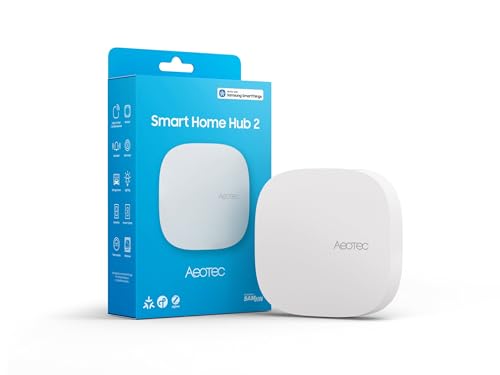
The Aeotec Smart Home Hub2 – V4 is ideal for anyone looking to streamline their home automation with seamless compatibility for both Alexa and Google Assistant. This hub acts as a SmartThings Hub and Matter Gateway, supporting Zigbee and thousands of devices like lights and sensors. You’ll appreciate the easy setup via Wi-Fi or Ethernet, perfect for any living space. Enjoy voice control to manage devices, create custom routines for security and energy savings, and benefit from local automation that works even without internet. Elevate your smart home experience effortlessly with this versatile hub at the center of your system.
Best For: Those seeking a versatile hub to integrate and manage a wide range of smart home devices with ease using voice control.
Pros:
- Supports multiple standards including Zigbee and Matter, enabling compatibility with thousands of devices.
- Easy setup allows for quick installation via Wi-Fi or wired Ethernet, making it suitable for various living spaces.
- Local automation capabilities ensure functionality even without internet connectivity, enhancing reliability.
Cons:
- No Z-Wave support, limiting compatibility with Z-Wave devices.
- Dependent on Wi-Fi for full functionality, which may be a drawback in areas with unstable internet.
- Potential learning curve for users new to smart home technology when setting up routines and automations.
SmartThings Hub 3rd Generation Smart Home Automation Hub
![SmartThings Hub 3rd Generation [GP-U999SJVLGDA] Smart Home Automation Hub Home Monitoring Smart Devices - Alexa Google Home Compatible - Zigbee, Z-Wave, Cloud to Cloud Protocols – White](https://m.media-amazon.com/images/I/21hChu0ounL._SL500_.jpg)
For anyone looking to streamline their smart home experience, the SmartThings Hub 3rd Generation stands out with its impressive compatibility across multiple platforms, including Alexa and Google Home. This compact hub, measuring just 5 x 5 inches, allows you to monitor and control your devices through a single smartphone app. With support for Zigbee and Z-Wave, you can automate your devices based on triggers like motion detection. Weighing only 4.8 ounces and powered by batteries, it’s perfect for indoor use. Plus, with a 4.3-star rating from over 9,000 reviews, it’s a reliable choice for any smart home setup.
Best For: Individuals looking to enhance their smart home automation experience with a versatile and user-friendly hub.
Pros:
- Wide Compatibility: Works seamlessly with Alexa, Google Home, Zigbee, and Z-Wave devices.
- User-Friendly: Control and automate devices through a single smartphone app with straightforward setup.
- Compact Design: Lightweight and compact, making it easy to place in any indoor location.
Cons:
- Limited Outdoor Use: Designed specifically for indoor environments, which may not suit all users.
- Battery Powered: Requires batteries, which may necessitate frequent replacements.
- Dependence on App: Full functionality relies on the smartphone app, which may not be ideal for everyone.
Homey Pro Smart Home Hub for Home Automation

If you’re looking to streamline your home automation experience, the Homey Pro Smart Home Hub is an excellent choice. It supports Z-Wave Plus, Zigbee, Wi-Fi, BLE, Infrared, Matter, and Thread, making it compatible with over 50,000 devices from more than 1,000 brands. With Homey Flow, you can unify your smart devices, control them remotely, and automate actions effortlessly. Plus, it processes data locally, reducing your reliance on cloud services. You can optimize energy usage based on solar generation or dynamic tariffs, helping you cut down on bills while keeping your home comfortable. Elevate your smart home with Homey Pro today!
Best For: Homeowners looking for a versatile and efficient smart home hub that seamlessly integrates a wide range of devices and offers local processing capabilities.
Pros:
- Supports over 50,000 devices from more than 1,000 brands, ensuring compatibility with a vast array of smart home products.
- Local processing of data enhances privacy and reduces reliance on cloud services, offering a more secure smart home experience.
- Energy management features allow users to optimize energy usage, potentially leading to lower utility bills.
Cons:
- The initial setup and configuration may be complex for some users unfamiliar with smart home technology.
- While it supports numerous devices, some less common brands or models may not be compatible.
- Regular updates may be required to maintain compatibility with new devices and features, which could be a hassle for some users.
Tapo Smart Home Central Hub for Smart Devices (Tapo H500)

Designed for homeowners seeking a streamlined approach to managing their smart devices, the Tapo Smart Home Central Hub (Tapo H500) offers centralized control for up to 16 Tapo cameras and 64 Sub-G sensors. You can monitor up to four cameras for continuous recording, all through the Tapo App, which provides activity overviews and daily summaries. With built-in 16GB storage and expandable capacity, you won’t need multiple microSDs. Advanced WPA3 encryption enhances security, while facial recognition minimizes unnecessary alerts. Enjoy flexible networking options, and communicate with visitors using two-way audio, ensuring your home stays secure and connected.
Best For: Homeowners looking for a comprehensive and user-friendly solution to manage and secure their smart home devices.
Pros:
- Centralized control for multiple devices, allowing for streamlined management of up to 16 cameras and 64 sensors.
- No subscription fees for accessing recordings, with built-in storage that can be expanded.
- Enhanced security features, including WPA3 encryption and facial recognition, provide peace of mind.
Cons:
- Limited to Tapo devices, which may restrict compatibility with other smart home brands.
- Expandable storage requires additional purchases for optimal use.
- Potential dependency on WiFi connectivity for full functionality, which may be a concern during outages.
Homey Bridge Smart Home Hub for Home Automation

Homey Bridge Smart Home Hub stands out as an ideal choice for tech-savvy homeowners looking to streamline their home automation experience. It supports Z-Wave Plus, Zigbee, Wi-Fi, BLE, and Infrared, seamlessly integrating with devices from brands like Sonos, Philips Hue, and Nest. With the Homey app, you can create automated routines, or “Flows,” and control your devices using voice commands through Alexa or Google Assistant. Homey also prioritizes your privacy, ensuring your data isn’t shared without consent. Plus, the included 3-month Homey Premium subscription allows you to connect more devices and access advanced features for just $2.99/month afterward.
Best For: Tech-savvy homeowners looking to streamline their home automation experience with versatile device compatibility and privacy-focused features.
Pros:
- Supports multiple communication protocols (Z-Wave Plus, Zigbee, Wi-Fi, BLE, and Infrared) for extensive device integration.
- Allows for voice control and automation through popular assistants like Amazon Alexa and Google Assistant.
- Includes a 3-month premium subscription for enhanced features and the ability to connect more than five devices.
Cons:
- Requires a subscription after the trial period to maintain advanced features and connect additional devices.
- Initial setup may be complex for users unfamiliar with smart home technology.
- Limited to specific brands and devices; compatibility checks are necessary for user devices.
Factors to Consider When Choosing a Smart Hub for Home Automation
When choosing a smart hub for your home automation, you’ll want to evaluate several key factors. Think about the device compatibility range, connectivity options, and automation capabilities that best fit your needs. Also, don’t overlook voice assistant integration and local processing features, as these can greatly enhance your smart home experience.
Device Compatibility Range
Choosing the right smart hub for your home automation system hinges on its device compatibility range. You’ll want to verify that the hub supports a wide variety of devices, as some hubs connect with thousands of products from various brands, while others are limited. Look for hubs that utilize multiple communication protocols like Zigbee, Z-Wave, and Matter to enhance connectivity across different ecosystems. For instance, the Homey Pro can integrate with over 50,000 devices from more than 1,000 brands. Additionally, check if the hub works with popular voice assistants like Alexa and Google Assistant for added convenience. Finally, verify it can connect with essential devices like smart lighting, security systems, and climate controls to meet your automation needs.
Connectivity Options Available
A smart hub’s connectivity options play a crucial role in its effectiveness and ease of use in your home automation setup. Look for hubs that offer both Ethernet and Wi-Fi, allowing you to choose a wired or wireless connection based on your preferences and network stability. Many hubs support various communication protocols like Zigbee, Z-Wave, and Matter, ensuring compatibility with a wide range of devices. Dual-band Wi-Fi (2.4/5 GHz) can enhance connectivity, reducing interference for better performance. If you want a cleaner installation, consider hubs with Power over Ethernet (PoE) capabilities, which simplify wiring. Finally, local processing features can improve responsiveness, reducing your hub’s reliance on internet connectivity for control functions.
Automation Capabilities Offered
Smart hubs do more than just connect devices; they empower you to automate your home in ways that enhance convenience and efficiency. Many hubs let you create custom automation rules and scenes directly, so you can tailor your home control without needing external services. With local processing capabilities, your routines can run quickly and reliably, even without an internet connection. Advanced hubs support multiple communication protocols like Zigbee, Z-Wave, and Matter, integrating a wide variety of smart devices seamlessly. You can automate routines based on specific triggers, such as motion detection or time schedules, which boosts energy efficiency. Some hubs even offer energy management features, allowing you to schedule device usage based on solar generation or dynamic tariffs to optimize savings.
Voice Assistant Integration
When considering voice assistant integration, you’ll want to guarantee your smart hub is compatible with popular platforms like Amazon Alexa or Google Assistant. This compatibility enhances the convenience of controlling your smart devices through simple voice commands. Look for hubs that support voice control across a variety of devices, including lights, locks, thermostats, and cameras, to create a unified smart home experience. Integration with voice assistants also allows you to set custom routines, automating multiple actions with just one command, which simplifies your daily tasks. Additionally, hands-free operation and remote access features mean you can manage your smart home even when you’re away, ensuring you stay connected and in control, no matter where life takes you.
Local Processing Features
Choosing a smart hub with local processing features can greatly enhance your home automation experience. With local processing, your hub can execute automation rules without depending on cloud services, resulting in quicker response times and improved reliability during internet outages. You’ll enjoy managing your devices offline, ensuring everything works smoothly regardless of connectivity. Plus, many hubs store your data locally, boosting privacy and security by reducing exposure to potential breaches. This capability also leads to energy savings, allowing devices to operate based on real-time conditions. Some smart hubs even provide energy monitoring and historical usage tracking, giving you valuable insights into your consumption patterns. Prioritize local processing features to maximize your smart home’s efficiency and reliability.